Are There Any Disadvantages Associated With Paying off a Mortgage Early?

I’m often asked if it makes sense to pay off a mortgage early or invest the cash in the markets. As is often the case in personal finance, the answer is, wait for it…..it depends.

The disadvantages, if any, may stem from the financial trade-offs that a mortgage holder needs to make when paying off the mortgage. Paying it off typically requires a cash outlay equal to the amount of the principal. If the principal is sizeable, this payment could potentially jeopardize a middle-income family’s ability to save for retirement, invest for college, maintain an emergency fund, and take care of other financial needs.

If you have the financial means to pay off a mortgage, consider the following:

  • Your feelings about debt — Some homeowners like the feeling of security that comes with owning a home free and clear. Knowing this may help you sleep better at night.  If this describes you, it may be to your benefit to pay off or reduce the size of your mortgage. Should conditions in your local real estate market decline, there’s less of a chance of owing more than you own.
  • Your current interest rate — If you currently have a low fixed interest mortgage rate, and having mortgage debt doesn’t bother you much, then investing the sum may yield better after-tax returns. Just keep in mind that markets may move down, so there is a risk here. You should discuss this option with your financial planner so you understand it well.
  • Your timeline until retirement — If your mortgage is relatively small and you pay it off, you may be able to invest the money formerly used for mortgage payments for retirement or other long-term goals. Your timeline until retirement may be a factor when making this decision. With 10 years or more remaining until you expect to retire, you could have time to build a nest egg if you invest the money formerly used to pay a mortgage. If you plan to retire sooner, entering retirement without a mortgage could provide you with more flexibility during your later years.
  • Your tax savings — Mortgage interest typically is tax deductible. During the early years of a mortgage, when the interest payments are highest, many homeowners benefit from a sizeable deduction. This could be important if you are in a higher tax bracket. If your interest payments are relatively low, the tax savings could be less of a factor. The amount of your other itemized deductions may be a factor if their total is close to your standard deduction.
  • Your future plans — Owning a home outright could be an advantage if you plan to sell it during the next few years. You could potentially leave your existing residence with more home equity.
  • Your overall debt load — If you are carrying other forms of debt, such as credit card balances or a college loan, consider whether you could benefit from paying off other debt first before reducing or eliminating your mortgage.

There is no “right” answer for everyone when it comes to potentially paying off a mortgage. Consider your feelings about debt, current interest rate, your timeline with respect to long-term goals, your tax savings, and other factors before making a decision that is in your best interest.

After-Tax Value of Home Mortgage Deduction

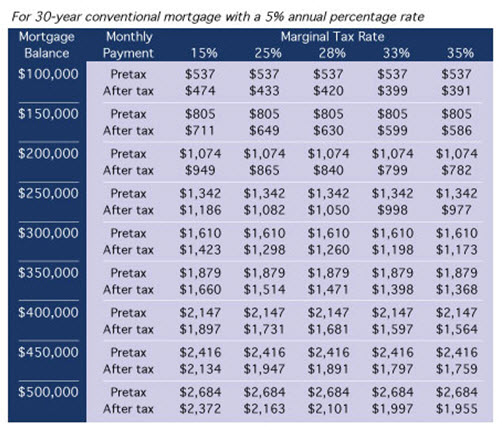
One of the big benefits of home ownership is the mortgage interest deduction. The federal government lets you deduct mortgage interest on a first or second home, up to $1 million per year.

30-year conventional mortgage pix

Source:

Wealth Management Systems Inc. Monthly payments assume a conventional 30-year fixed-rate mortgage at 5% APR, excluding escrows for taxes, insurance, or other fees. Mortgage deductions are based on first month’s interest. Assumes that other deductions exceed the standard deduction. (CS0000218)

If you would like to review your current mortgage payoff options, your investment portfolio or discuss any other financial planning matters, please don’t hesitate to contact us or visit our website at http://www.ydfs.com. We are a fee-only fiduciary financial planning firm that always puts your interests first.  If you are not a client yet, an initial consultation is complimentary and there is never any pressure or hidden sales pitch.

The Bears Invade Shanghai

With all eyes on Greece, a bigger and potentially more disturbing market disruption is taking place—in a much larger economy. As you read this, the Chinese stock market is experiencing the kind of free-fall not seen since the 2008 drop in global markets. Some are comparing it to the 1929 crash in U.S. stocks.

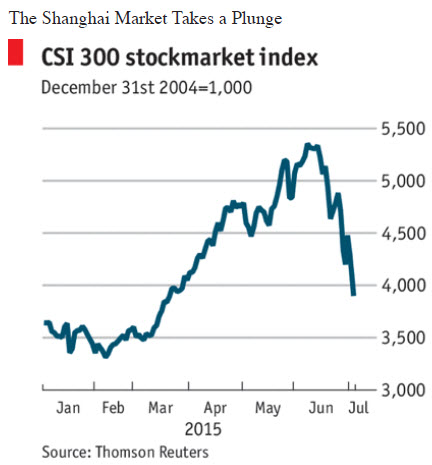
Bears in Shanghai

As you can see from the chart, the fall has been fairly dramatic, even if it has not yet taken share prices on the Shanghai Composite Index below where they were previous to a perilous bull run that began in February. The fall has apparently alarmed the Chinese government, which has authorized extraordinary interventions. Among them: twenty one Chinese brokerage firms have agreed to invest the equivalent of $19 billion in stocks, in an effort to create more demand. The stock exchanges suspended initial public offerings so as not to put any more shares on the market. The Chinese central bank has cut its benchmark lending and interest rates rates. And the government itself, through its pension system, has now been authorized to “play” the market.

Perhaps the most ominous intervention, however, came when China’s market regulator decided that brokers should not force people who have bought stocks on margin (borrowed funds) to engage in forced selling in order to cover their debts. Instead, the brokers were told to extend additional margin loans that would be collateralized by investors’ homes. If the market continues to plunge, observers wonder, how will investors (or banks) liquidate those houses? Is it wise to spread the risk from the stock sector to real estate valuations?

The brokerage pledge to buy shares is reminiscent of 1929 Wall Street, when the great banking houses of J.P. Morgan and Guarantee Trust Company committed their resources to propping up the U.S. stock market. That experiment was not a notable success; the Dow Jones Industrial Average fell 13% the following Monday and dropped another 34% over the next three weeks. The Chinese intervention fund, led by Citic Securities Co. and Guotai Junan Securities Co., faces a similar uphill battle; the war chest represents only one-fifth of the Chinese market’s daily trading volume.

So far, Chinese investors have lost $2.7 trillion of stock value—the equivalent of six times Greece’s entire foreign debt. Much of the pain has been borne by individuals, who own four-fifths of China’s stocks, far more than in Western markets where institutional investors are the dominant owners. Many of these common folk borrowed money to buy their shares, contributing to a nine-fold increase in margin lending by brokerage firms over the past two years. This dramatic rise in speculative investing has echoes both in the runup to 1929 and 2008, two periods when reckless betters (individuals in the earlier era, Wall Street in the latter) were able to borrow 90% of the money they “invested.”

Moreover, the margin loans carry annual interest rates as high as 20%. Total margin debt, when you add up the brokerage firms, banks and informal loans, could amount to as much as $1 trillion. As share prices fall, investors would be left with far less in stock value than the high-interest loans they owe—making repayment problematic, potentially putting $1 trillion worth of stress on the Chinese banking system.

It gets worse. Many smaller Chinese companies have financed their expansion by taking out loans against the value of their shares. The companies have had to post additional collateral as the share value dropped down to the outstanding balance on the loan. Additional market losses could put these companies in real danger of default, adding to the stress.

Nobody knows if the free-fall will continue to feed on itself, or if the government will somehow manage to slow the descent. But highly-leveraged investing on a mass scale seldom ends well, as most of us remember from the subprime crisis when we had to reach into our pockets to make Wall Street whole again on its disastrous speculations.

Fortunately, none of this is likely to directly affect the portfolios of American investors, since foreigners account for only about 4% of the Chinese stock market. But as the crisis deepens, and especially if the defaults start to mount, companies go under and the banks stop lending into the economy, you could see commodity prices fall on weaker demand, and there could be a hit to large American companies that do a lot of business in the Asian markets. As an emerging market, China’s setback could pressure emerging market funds, which many of us are exposed to in our portfolios. Finally it could be a long time before individual Chinese investors trust the stock market again. That would be exactly the opposite of the Chinese government’s plan.

If you would like to review your current investment portfolio or discuss any other financial planning matters, please don’t hesitate to contact us or visit our website at http://www.ydfs.com. We are a fee-only fiduciary financial planning firm that always puts your interests first.  If you are not a client yet, an initial consultation is complimentary and there is never any pressure or hidden sales pitch.

Sources:

http://www.economist.com/news/business-and-finance/21657036-measures-prop-up-share-prices-appear-be-failing-bear-wrestling

http://www.bloomberg.com/news/articles/2015-07-06/timeline-china-s-efforts-to-stem-3-2-trillion-stock-rout

http://www.nytimes.com/2015/07/06/business/international/chinas-market-rout-is-a-double-threat.html?_r=0

http://www.bloombergview.com/articles/2015-07-06/china-steers-toward-a-subprime-economy

The MoneyGeek thanks guest writer Bob Veres for his contribution to this post
 

“Grexit” Vote Coming

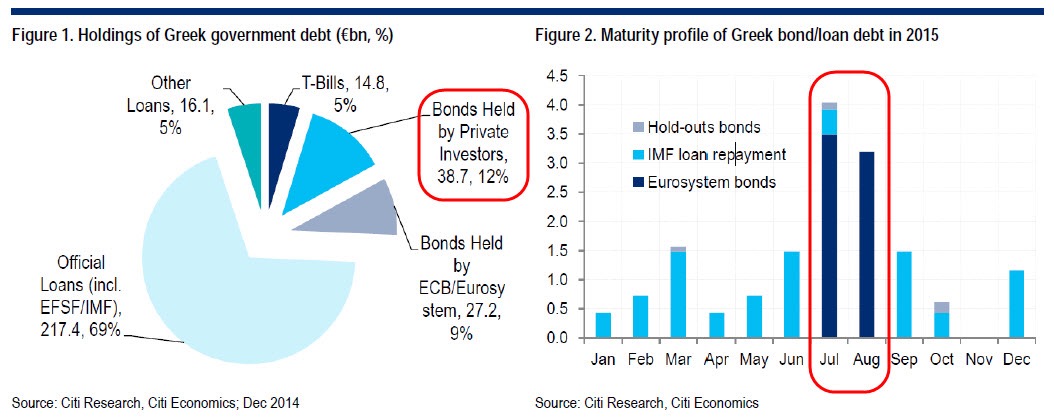
Any way you look at it, the standoff between the nation of Greece and the leaders of the European Union is a mess. But it may not be quite the problem that the press is making it out to be. In case you haven’t been following the story, the gist of it is that the Greek government, over a period of years that included the time it hosted the Summer Olympics, issued more bonds than, in retrospect, it could possibly pay back. The total debt outstanding peaked at somewhere around $340 billion, which is actually more than the $242 billion in goods and services that the entire Greek economy produces in a year.  You’ve no doubt heard about a series of bailouts organized by the European Union, the International Monetary Fund and other groups which have collectively extended loans and extensions amounting to $217 billion to date. As you can see from Figure 2, on the right-hand side, roughly $4 billion in payments are due in July and more than $3 billion in August, after which time the payment schedule becomes somewhat more forgiving through 2022. Grexit 2015-06-29 There are three problems with this picture. First, it has become apparent that Greece doesn’t have the money to make the July and August payments. Second, in return for additional debt relief, the various creditors are asking that the Greek government do more than just balance its budget (which it has). Their demands seem a bit harsh and somewhat picky when they’re organized in a list: Greece would have to reduce pension payments to current and retired workers by 40%, raise the retirement age to 67 in 2022 rather than 2025, phase out supplemental bonuses for poorer retirees in 2017 rather than 2018, and cut back on early retirement immediately. (The proposals also include additional taxes on consumers but not businesses.)   And third: the newly-elected Greek government, led by Alexis Tsipras of the Syriza party, ran on a platform of rejecting any further budget concessions and compromises. This turned out to be an extremely successful political strategy: the party won 149 out of the 300 seats in the Greek Parliament in what is regarded as a rousing popular mandate. Negotiations predictably broke down, and now the Syriza leaders are asking the Greek citizens to vote on whether they will accept the or reject the austerity measures that the EU creditors are demanding. Polls suggest that the voters would like to keep their country in the Eurozone but that they oppose any additional budget reductions. In other words, nobody knows how the referendum will end. If the citizens of Greece reject austerity, it will present the European Union with a difficult choice: back down and continue to help Greece ease out of the crisis (which would be politically difficult to sell, especially to German voters), or deny the concessions that Greece needs, and effectively force Greece out of the Eurozone. If the latter happens, then the future becomes a bit murky. Greek banks have been shut down in advance of the July 5 vote, strongly suggesting that Greek leaders, holding a “no” vote, would no longer use the euro as its currency. They would print drachmas, which, in those frozen bank accounts, would replace euros at par. The drachmas would immediately lose value on the international markets, which would allow Greece to undercut its competitors in the export markets. Meanwhile, Greece could default on all or portions of its debt, and offer to pay drachmas instead. Who loses in this scenario? Everybody. The European banks holding Greek debt and private investors, are the obvious losers. But closer to home, any Greek citizen who didn’t get his/her money out of the bank before the freeze, will have to accept a haircut on the deposits, as drachmas will inevitably be worth less than euros. At the same time, many Greek banks are holding massive amounts of Greek government debt, which they need as collateral for European Central Bank loans that are keeping THEM (the banks) afloat. Alternatively, Greece could offer everyone 50-70 cents on the dollar in debt repayments, and would probably get mostly takers from creditors who would like to put this whole saga behind them. Do YOU lose in any of these scenarios? If either side blinks, then the situation goes back to business as usual. If Greek voters agree to give the EU what it wants, then some economists believe that the Greek economy will go into a steep recession, but your personal exposure to Greek companies is almost certainly minimal, and the problem will be temporary. If Greek voters vote “no”, the EU negotiators remain intractable and Greece leaves the Eurozone, then you can expect breathless and sometimes scary headlines and short-term turmoil in European stocks, with some investors panicking and others uncertain. But the smart money says that the Eurozone is strong enough to sustain the loss of one of its smallest economies, and Greece, too, will survive. The irony, which nobody seems to have noticed, is that after accepting many of the earlier austerity measures, the Greek government is actually running a budget surplus without the debt payments—something U.S. citizens can only dream of. If the additional austerity measures do, eventually, get put in place, the subsequent recession would reduce tax receipts and push Greece back into deficits again. If you’re a Greek citizen who hit the ATM after they had run out of money, then this is a pretty big crisis for your long-term financial situation. Otherwise, like most so-called “crises,” the possibility of a “Grexit” and the upcoming special election in Greece is more about entertainment than about making or losing money in your long-term portfolio.  There may even be opportunities to buy some good solid companies or funds from those panicking out of their positions. So the Grexit is a non-issue for anyone not living and working in Greece. Our financial system had five years to manage, hedge, and otherwise reduce exposure to a Greek default. Most Greek debt is now held by European governments who can weather these losses. For them it isn’t a big deal because they didn’t enter into these positions expecting a profit, or even their money back. All they were doing is buying stability and time. And given that they delayed the inevitable Greek default by five years, they did a pretty good job. While a few politicians might lose their jobs and damage their legacy over this, the financial system will survive without Greece because of the time they bought us. If you would like to review your current investment portfolio or discuss any other financial planning matters, please don’t hesitate to contact us or visit our website at http://www.ydfs.com. We are a fee-only fiduciary financial planning firm that always puts your interests first. If you are not a client yet, an initial consultation is complimentary and there is never any pressure or hidden sales pitch. Sources: https://en.wikipedia.org/wiki/Economy_of_Greece http://confluenceinvestment.com/assets/docs/2015/daily_Jun_29_2015.pdf http://www.zerohedge.com/news/2015-02-03/who-owns-greek-debt-and-when-it-due http://www.washingtonpost.com/blogs/wonkblog/wp/2015/06/25/europe-strikes-back-it-seems-to-be-trying-to-push-greece-out-of-the-euro/ TheMoneyGeek thanks guest writer Bob Veres for his help writing this post

The Value of Objective Financial Planning

What is the value that people get when they work with an objective, client-focused financial planner?

Most planning firms are reluctant to toot their own horns—partly out of modesty, and partly out of a conviction that you probably have better things to do than read about how they help you with your financial life. But every once in a while, it’s a good idea to stop and think about what you get, for what you pay.

This list is organized in rough order of value, and if you feel you aren’t getting all of these benefits from your financial planner, you should let her or him know.

1) An independent financial planner helps protect you from financial predators.

It’s a touchy issue in the profession whether advisors who put their clients’ interests first should be “bashing the competition,” but in fact the Wall Street firms that pretend to offer financial planning guidance are seldom (if ever) looking out for the best interests of their customers. When you work with a broker (possibly also known, on their business card, as  “vice president of investments,”) you will be presented with separately-managed accounts that look like mutual funds, except they share their fees with the brokerage firm, plus a lot of investments that have to pay people to recommend them—never a good sign for the end investor.

And since the investment markets are extremely complicated, it’s usually hard for a layperson to know when there are much better alternatives than the “opportunities” being presented.

2) An independent financial planner helps you keep track of and make your financial affairs more efficient.

It is not uncommon for financial planners to talk with clients who once had a will drawn up, but they’re not sure exactly when. Now that you mention it, they’re curious about what, exactly, it says. There’s a life insurance policy in a drawer somewhere, and it may be a term policy or it may be a cash value contract; all the client knows for sure is that she writes a check to the insurance company every year. Upon inspection, it turns out the auto insurance policy she happens to own is way more expensive than the lowest rate available in the market, and the homeowner’s policy hasn’t been updated since the Clinton Administration.

And the investments are not uncommonly a hodgepodge of what a broker sold the client based on what he was told by his bosses to recommend at different times during the relationship.

Hopefully, this was never you. But it does offer a certain peace of mind to know that everything is organized, in one place, and that somebody is paying attention to the details. Because in your financial life, the details matter.

3) An independent financial planner will stand between his/her clients and the dysfunctional emotional decisions that everybody makes with their own investments.

Do you remember how it felt when Lehman Brothers went down, and the U.S. government was bailing out General Motors? Many people sold everything at the bottom, and then waited, and waited, and waited to get back into the markets until it was “safe.” To this day, I still get calls from people who left the markets near the bottom and never got back in. They never dreamed that the markets would go on six year bull run that would take us to new record highs, and want to know if it’s too late to get back in.

The Morningstar (research) organization has calculated the difference between investment returns and investor returns—that is, between the returns people actually get vs. what the markets (or individual mutual funds) have delivered. Results? It is not unusual, during various time periods, for individual investors to get about half the returns of the market. How is that possible? They may be moving the portfolio around, or buying an attractive-looking hot fund or selling a great fund that’s going through a rough patch. They may sell out at the bottom of a scary period, or go all-in when the markets are about to take a nasty tumble.

For many of us, the best approach is to find good, solid investments and stay the course through thick and thin, ups and downs. But it’s very hard to do those things on your own. An independent advisor provides a dose of objectivity right when you need it.

4) An independent financial planner is a strong advocate for your future.

You know the statistics about the savings rate in America (the 2000-2008 numbers hovered around 0% of income, spiked briefly after the Great Recession, and are now back in the 1% range again). But the keepers of these statistics don’t tell you that they probably overstated the actual rate, because they didn’t include things like increasing credit card balances or home equity loans. When people put money in their savings account, and at the same time run up more debt, they still counted it as an increase in their savings.

The problem for most consumers is that there is no voice in their environment advising them to pay themselves a fair percentage of the income that they earn. Instead, they’re bombarded by messages which make powerful arguments to do the opposite: to buy this, that, or something else. The entire advertising community conspires to take those dollars out of their hands before they ever hit an investment account.

Advisors become that rare voice speaking out in favor of saving. And in some cases, they help identify expenditures that are not in line with your stated future goals. Which leads us to:

5) An independent financial planner helps people identify what is important in their lives and prioritize their goals.

How many people do you know who have taken the time to identify what they really want out of life?

The incredibly sad truth is that the vast majority of people in our advanced, prosperous society have not taken the time to figure out what they really want out of the all-too-brief time they will spend on this planet. And because they don’t know their destination, they will never reach it. They are, in a very real sense, at the mercy of whatever agenda others have for them.

An independent financial planner will ask questions in your initial interview which help you recognize what you don’t know about what you want, and help you identify your most personal goals and desires. That, alone, can be a priceless service.

6) An independent financial planner can help people turn seemingly impossible goals into a routine that can achieve them.

After years of running retirement planning spreadsheets, and working with successful individuals in the community, advisors eventually master one of the truly magical lessons of life: that any enormous goal can be broken down into manageable, monthly increments, and achieved by routine and persistence. You save X amount of dollars every month in a portfolio that gets something close to what the market offers, and you will retire with a sum of money that seems impossible to you now.

Clients who have goals that they don’t believe they can achieve are put on a schedule that will get them there as a matter of routine.

Of course, this list doesn’t include specialized services like making retirement planning projections, charitable planning, creating special needs trusts for a disabled child, reducing overall taxes, social security planning, evaluating disability and long-term care insurance—and it doesn’t mention the comfortable knowledge that you can call an expert for advice on virtually any financial subject, and you’ll get an answer that is not tainted by a sales agenda.

The point is that the services offered by an independent financial planner can have enormous value to people who are motivated to enjoy successful, prosperous lives. An independent planner’s only goal is your success and prosperity, which should not be—but is—unusual in our financial world.

If you would like to review your current investment portfolio or discuss possibly hiring us as your financial planner, please don’t hesitate to contact us or visit our website at http://www.ydfs.com. We are a fee-only fiduciary financial planning firm that always puts your interests first.  If you are not a client yet, an initial consultation is complimentary and there is never any pressure or hidden sales pitch.

TheMoneyGeek thanks guest writer Bob Veres for contributing to this post

It’s 2015: Do You Know Who Your Beneficiaries Are?

Many IRA owners may not be aware that after their death, the primary beneficiary — usually the surviving spouse — may have the right to transfer part or all of the IRA assets into another account.

Many investors have taken advantage of pretax contributions to their company’s employer-sponsored retirement plan and/or make annual contributions to an IRA. If you participate in a qualified plan program you may be overlooking an important housekeeping issue: beneficiary designations.

An improper designation could make life difficult for your family in the event of your untimely death by putting assets out of reach of those you had hoped to provide for and possibly increasing their tax burdens. Further, if you have switched jobs, become a new parent, been divorced, or survived a spouse or even a child, your current beneficiary designations may need to be updated.

Consider the “What Ifs”

In the heat of divorce proceedings, for example, the task of revising one’s beneficiary designations has been known to fall through the cracks. While a court decree that ends a marriage does terminate the provisions of a will that would otherwise leave estate proceeds to a now-former spouse, it does not automatically revise that former spouse’s beneficiary status on separate documents such as employer-sponsored retirement accounts and IRAs.

Many IRA owners may not be aware that after their death, the primary beneficiary — usually the surviving spouse — may have the right to transfer part or all of the IRA assets into another account. Take the case of the IRA owner who has children from a previous marriage. If, after the owner’s death, the surviving spouse moved those assets into his or her own IRA and named his or her biological children as beneficiaries, the original IRA owner’s children could legally be shut out of any benefits.

Also keep in mind that the law requires that a spouse be the primary beneficiary of a 401(k) or a profit-sharing account unless he/she waives that right in writing. A waiver may make sense in a second marriage — if a new spouse is already financially set or if children from a first marriage are more likely to need the money. Single people can name whomever they choose. And non-spouse beneficiaries are now eligible for a tax-free transfer to an IRA.

The IRS has also issued regulations that dramatically simplify the way certain distributions affect IRA owners and their beneficiaries. Consult your tax advisor on how these rule changes may affect your situation.

To Simplify, Consolidate

Elsewhere, in today’s workplace, it is not uncommon to switch employers every few years. If you have changed jobs and left your assets in your former employers’ plans, you may want to consider moving these assets into a rollover IRA. Consolidating multiple retirement plans into a single tax-advantaged account can make it easier to track your investment performance and streamline your records, including beneficiary designations.

Review Your Current Situation

If you are currently contributing to an employer-sponsored retirement plan and/or an IRA, contact your benefits administrator — or, in the case of the IRA, the financial institution — and request to review your current beneficiary designations. You may want to do this with the help of your tax advisor or estate planning professional to ensure that these documents are in synch with other aspects of your estate plan. Ask your estate planner/attorney about the proper use of such terms as “per stirpes” and “per capita” as well as about the proper use of trusts to achieve certain estate planning goals. Your planning professional can help you focus on many important issues, including percentage breakdowns, especially when minor children and those with special needs are involved.

Finally, be sure to keep copies of all your designation forms in a safe place and let family members know where they can be found.

This communication is not intended to be tax or legal advice and should not be treated as such. Each individual’s situation is different. If you would like to review your current beneficiary designations or discuss any other estate or financial planning matters, please don’t hesitate to contact us or visit our website at http://www.ydfs.com. We are a fee-only fiduciary financial planning firm that always puts your interests first.  If you are not a client yet, an initial consultation is complimentary and there is never any pressure or hidden sales pitch.

Planning for Known — and Unknown — Health Care Costs in Retirement

The issue of health care costs in retirement — and planning for them well in advance of retirement — is becoming a centerpiece of any retirement planning discussion.

A recent study by Employee Benefit Research Institute (EBRI) projected that in 2014, men and women who wanted a 90% chance of having enough money to cover out-of-pocket health care expenses in retirement would need to have saved $116,000 and $131,000 respectively by age 65.1 This is a sobering goal when you consider that just 42% of workers in their 50s and 60s report total savings and investments in excess of $100,000.2

Part of the problem with putting a price tag on retiree health care expenses is that every situation will vary depending on an individual’s health, the type of health care coverage they carry, and when they hope to retire. That said, EBRI has identified some “recurring expenses,” or standard elements of cost that can be estimated and planned for in advance as well as “non-recurring” expenses that are less predictable but tend to increase with age.

Recurring vs. Non-Recurring Expenses

Using data gleaned from the Health and Retirement Study (HRS) — a longstanding, highly respected study of representative U.S. households with individuals over age 50 — EBRI was able to categorize utilization patterns and expenses for two separate types of health care services:

  • Recurring services — include doctor visits, prescription drug usage, and dentist services. Since these services tend to remain stable throughout retirement, it is possible to calculate an average out-of-pocket expense among individuals age 65 and older of $1,885 annually.3 Projecting forward, and factoring in the following assumptions: a 2% inflation rate, a 3% rate of return on investments, and a life expectancy of 90 years, EBRI estimates that one would need $40,798 at age 65 to cover the average out-of-pocket expenses for recurring health care needs throughout retirement. It should be noted that this calculation does not include expenses for any insurance premiums or over-the-counter medications.
  • Non-recurring expenses — include overnight hospital stays, overnight nursing home stays, home health care, outpatient surgery, and special facilities. Unlike recurring expenses, the cost of most non-recurring services increases with age. For example, average annual out-of-pocket expenses for nursing home stays are estimated at $8,902 for those in the 65 to 74 age group, $16,948 for those aged 75 to 84, and $24,185 for individuals aged 85 and up.3

Yet because the likelihood of utilizing these services and the degree to which they will be needed is largely unknown, projecting the savings needed to cover these costs throughout retirement is an elusive exercise. However, by thinking about the total out-of-pocket savings goals of $116,000 for men and $131,000 for women cited earlier in terms of recurring and non-recurring costs may help retirees and those nearing retirement in their planning efforts.

Bigger Picture Planning

As financial planners, we often recommend taking a holistic approach to calculating income needs in retirement, factoring in such costs as taxes and debt payments along with other typical expenses including health care. In addition to the out-of-pocket health care calculations discussed above, consider what you think you might have to pay in annual premiums if you were to apply for health insurance today. Lastly, and perhaps most important, add in an allowance for inflation — both general and health care inflation.

Your financial planner can help get the retirement income planning discussion started and — as part of that exercise — can work with you to put some numbers around your health care planning needs.

This article offers only an outline; it is not a definitive guide to all possible consequences and implications of any specific saving or investment strategy. If you would like to review your retirement plan, investment strategy or discuss any other financial planning matters, please don’t hesitate to contact us or visit our website at http://www.ydfs.com. We are a fee-only fiduciary financial planning firm that always puts your interests first.  If you are not a client yet, an initial consultation is complimentary and there is never any pressure or hidden sales pitch.

Sources:

1Employee Benefit Research Institute, news release, “Needed Savings for Health Care in Retirement Continue to Fall,” October 28, 2014.

2Employee Benefit Research Institute, 2014 Retirement Confidence Survey, March 2014. (Not including the value of a primary residence or defined benefit plans.)

3Employee Benefit Research Institute, “Utilization Patterns and Out-of-Pocket Expenses for Different Health Care Services Among American Retirees,” February 2015.

The Next Bailout ?

It’s been five years since the newspapers exploded with stories of the Greek debt crisis, which, we were told, threatened the very existence of the Eurozone. Eventually, a variety of bailout packages were negotiated, and things seemed to return to normal.

As it turns out, the current rescue package will run out at the end of June. The European Union finance ministers and leaders of the newly-elected Greek government appear to be far apart in their negotiations on extending the bailout. The European Central Bank, International Monetary Fund and the European Commission have demanded that Greece institute another round of economic reforms, meaning austerity in government spending and services, higher value-added taxes, pension cuts, and a continuing decline in the Greek GDP and standard of living for ordinary citizens. The citizens, naturally, have been reluctant to endure any more pain, and elected leaders from the Syriza Party who ran in opposition to any more austerity, promising instead to cut a better deal, spend more, and generally use Keynesian economic theory to restart the economy. The Greek government recently rehired 4,000 public sector workers in a clear display of independence from the creditor demands.

Greece’s finance minister has agreed to make the next 750 million euro loan repayment to the International Monetary Fund, which staves off immediate default. But there is no question that the country will have to refinance 172 billion euros of debt. No deal means default and, possibly, what people are calling a “Grexit” from the Eurozone. You can expect to suddenly see headlines about the looming “crisis” and once again hear intimate details about the financial situation in Greece. If the negotiations succeed, and Syriza officials win concessions, it could bolster the strong anti-austerity populist movements in Spain, Portugal and Ireland.

Should you be concerned? If you’re holding a private stash of Greek bonds, or are receiving a government pension from the nation, then you should be following these developments closely. If not, then there is nothing about the negotiations which will change the underlying value of European stocks and bonds in most American portfolios. The headlines could cause a temporary stock market sell-off, particularly in the event of a Grexit, but corporate earnings and valuations will ultimately prevail, whether Greece is given a grace period, whether it remains part of the Eurozone—or not.

If you would like to review your current investment portfolio or discuss any other financial planning matters, please don’t hesitate to contact us or visit our website at http://www.ydfs.com. We are a fee-only fiduciary financial planning firm that always puts your interests first.  If you are not a client yet, an initial consultation is complimentary and there is never any pressure or hidden sales pitch.

Sources:

http://www.ft.com/cms/s/2/7f31597a-f4cd-11e4-abb5-00144feab7de.html?ftcamp=published_links%2Frss%2Fhome_us%2Ffeed%2F%2Fproduct#axzz3ZV6PABAZ

 http://www.huffingtonpost.com/rj-eskow/13-questions-about-greece_b_6621708.html

 TheMoneyGeek thanks guest writer Bob Veres for writing this post. 

How Do I Know If My IRA Contributions Are Tax Deductible?

Contributions to a traditional IRA are tax deductible if you don’t already participate in an employer-sponsored retirement plan. For 2015, the maximum you can contribute to an IRA is $5,500. If you are age 50 or over, you can make an additional “catch-up contribution” of $1,000.

If you do participate in an employer-sponsored plan, your contributions still can be fully or partially deductible, up to certain income thresholds. For 2015, those limits are between $61,000 and $71,000 for single filers and $98,000 and $118,000 for married couples filing joint returns.

If you are ineligible to make deductible contributions to a traditional IRA, you may want to investigate a Roth IRA. Contributions to a Roth IRA are made with after-tax dollars and are not tax deductible, but distributions are tax free. Be aware that there are income thresholds to contribute to a Roth. For 2015, those limits are between $116,000 and $131,000 for single filers and $183,000 and $193,000 for married couples filing joint returns.

You can find more information on the IRS website.

If you have questions about your current IRA’s or if you would like to discuss any other financial planning matters, please don’t hesitate to contact us or visit our website at http://www.ydfs.com. We are a fee-only fiduciary financial planning firm that always puts your interests first.  If you are not a client yet, an initial consultation is complimentary and there is never any pressure or hidden sales pitch.

The Harm in Financial Journalism

In most areas of our lives, the more information you get, and the more up-to-the-minute it is, the better we can conduct business and make astute decisions. It is interesting that investing is one area where the opposite is true.

We’re not talking here about the second-by-second blips on a Bloomberg terminal that traders and computer algorithms use to make quick-twitch buys and sells. We’re talking about the normal news reports, cable TV investment reports, and investing articles that we’re bombarded with on a daily basis. In general, the news and data supplied by consumer journalists is almost always harmful to your financial health.

How? Consider profiles of mutual funds and mutual fund managers. The quarterly profiles in Barron’s and the articles in Money, Kiplinger’s and the Wall Street Journal tend to focus a bright spotlight of attention on the hot funds—that is, funds that outperformed their peers (and the market) in the previous quarter. Three months’ worth of track record is statistical nonsense, but the hot fund manager is interviewed with breathless deference normally given to a certified genius. It is interesting that seldom if ever is the next quarter’s genius the same as the last one. Anyone who invests with the fund of the hour (or quarter) is in grave danger of suffering a regression to the mean—which means losses when compared with the indices.

Even one-year and five-year rankings have no predictive value, particularly when the focus is on outliers who were well ahead of their peers. Meanwhile, when we aren’t reading about hot managers, we’re hearing about what the stock market did (or is doing) today. Today’s price movements are, to a statistician, meaningless white noise, indicative of nothing remotely significant about the future. The markets go up today, down tomorrow, up for a week, down for a week, and during each of these time periods, analysts try to tell us the causes of these random bounces. They would be more productively employed trying to explain the “causes” behind each of the waves in the ocean, yet we can’t help listening to their plausible explanations as to why this earnings report, that jobs report, or some other speculation on what the Federal Reserve Board will or will not do, has affected our investment outlook.

And, of course, at market tops, when new money is chasing returns at the most dangerous possible time, the news reports are telling us how the markets have been going up, up, up. When markets are depressed, and it is the best possible time to put new money to work, the news reports are telling us all the bad news about months of market losses. Swimming against that tide is nearly impossible, even for professionals.

There may be meaningful information among this chatter, but it’s unlikely that most of us will see it amid the noisy background. Back in the late 1990s, one analyst who couldn’t believe how much people were paying for tech stocks, finally broke through the background noise by pointing out that Amazon’s share price had reached approximately the same level as the entire yearly economic output of the nation of Iceland, plus a few 747 cargo jets to carry it all back to the U.S. Of course, few listened, and the bursting tech bubble cost a lot of investors a fortune.

Today, we’re being told that the current market rally is long in the tooth, that the Fed is going to raise rates soon, that market valuations are kind of high, and of course that certain fund managers did really well last quarter and yesterday’s market was up or down. The problem is that we were hearing exactly the same things last year and the year before (remember?), and still the market churns ahead, cranking out new record highs.

Unlike just about any other activity you might pursue, the best, most astute way to invest is to turn off the noise and let the markets carry you where they must. The short-term drops tend to become buying opportunities in the long run, and over time, the U.S. and global economies reflect the underlying growth in value generated by millions of workers who go to work each day and build that value. Investor sentiment will swing around with the unhelpful prodding of journalists and pundits, but people who stay the course have always seen new market highs eventually, while people who react to every positive or negative report tend to fare much less well. When it comes to the markets, wisdom trumps up-to-the-minute knowledge every time.

Maybe somebody should tell that to the journalists.

If you would like to cut through the noise, review your current investment portfolio or discuss any other financial planning matters, please don’t hesitate to contact us or visit our website at http://www.ydfs.com. We are a fee-only fiduciary financial planning firm that always puts your interests first.  If you are not a client yet, an initial consultation is complimentary and there is never any pressure or hidden sales pitch.

TheMoneyGeek thanks guest writer Bob Veres for writing this post

Delaying Retirement May Provide the Financial Boost You Need

Americans are living longer, healthier lives, and this trend is affecting how they think about and plan for retirement. For instance, according to the Employee Benefit Research Institute, the age at which workers expect to retire has been rising slowly over the past couple of decades. In 1991, just 11% of workers expected to retire after age 65. Fast forward to 2014, and that percentage tripled to 33% — and 10% don’t plan to retire at all.1

Working later in life can offer a number of advantages. Many people welcome the opportunity to extend an enjoyable career, maintain professional contacts, and continue to learn new skills.

A Financial Boost

In addition to personal rewards, the financial benefits can go a long way toward helping you live in comfort during your later years. For starters, staying on the job provides the opportunity to continue contributing to your employer-sponsored retirement plan. And if your employer allows you to make catch-up contributions, just a few extra years of saving through your workplace plan could give your retirement nest egg a considerable boost, as the table below indicates.

A Few Extra Years Could Add Up

Year Maximum Annual Contribution Catch-Up Contribution for Workers Age 50 and Older Total Annual
Contributions
2015 $18,000 $6,000 $24,000
2016-2020 Indexed to inflation Indexed to inflation $??,???

Delaying Distributions

In addition to enabling you to continue making contributions to your employer’s plan, delaying retirement may allow you to put off taking distributions until you do hang up your hat. Typically, required minimum distributions (RMDs) are mandated when you reach age 70½, but your employer may permit you to delay withdrawals if you work past that age.

Keep in mind that if you have a traditional IRA, you are required to begin RMDs by age 70½, while a Roth IRA has no distribution requirements during the account holder’s lifetime — a feature that can prove very attractive to individuals who want to keep their IRA intact for a few added years of tax-deferred investment growth or for those who intend to pass the Roth IRA on to beneficiaries.

A Look at Social Security

Your retirement age also has a significant bearing on your Social Security benefit. Although most individuals are eligible for Social Security at age 62, taking benefits at this age permanently reduces your payout by 20% to 30% or more. Waiting until your full retirement age — between 66 and 67 — would allow you to claim your full unreduced benefit. And for each year past your full retirement age you wait to claim benefits, you earn a delayed retirement credit worth 8% annually up until age 70.2 Consider researching your options to continue working past the traditional retirement age. By remaining on the job, your later years may be more secure financially and more rewarding personally.

If you would like to discuss your retirement options/investments, or any other financial planning matters, please don’t hesitate to contact us or visit our website at http://www.ydfs.com. We are a fee-only fiduciary financial planning firm that always puts your interests first.  If you are not a client yet, an initial consultation is complimentary and there is never any pressure or hidden sales pitch.

Source:

1Employee Benefit Research Institute, 2014 Retirement Confidence Survey, March 18, 2014.

2Social Security Administration. The benefit increase no longer applies when you reach age 70, even if you continue to delay taking benefits.