Market & Economic Week-January 31, 2025

The S&P 500 index closed down 1% in a volatile week. Monday’s markets opened on a down note due to bad news for artificial intelligence stocks, mostly recovered during the week, then dipped back down on Friday due to news on tariffs going into effect over the weekend. The NASDAQ 100 index lost 1.4%, while the small-capitalization stocks (small caps) lost 1.5%

For January, the S&P 500 index gained 2.7%, the NASDAQ 100 was up 2.2%, and the small caps bounced back 2.0%, a solidly positive start to the year.

Consumer Confidence from the Conference Board fell 5.4 points in January. The Present Situation Index fell sharply by nearly ten points while the Future Expectations Index fell 2.6 points to 83.9, hovering above the Conference Board’s “80” threshold for “recession ahead.” Overall, consumer confidence remains within the same range as it has bounced in for the last two years.

The Commerce Department reported that U.S. manufactured durable goods orders plunged by 2.2% in December (amid a nosedive in orders for transportation equipment) after tumbling by a revised 2.0% in November. Economists expected an increase of 0.8% in December, which was a big expectations miss.

December New Home Sales from the Census Bureau rose 3.6%. However, unsold inventory continues to increase and now represents a supply of 8.5 months at the current sales rate, which is historically elevated and is among some of its highest levels since the popping of the last housing bubble.

Pending Home Sales from the National Association of Realtors (NAR) tumbled 5.5% in December, with decreased transactions in all four regions of the country. The report further highlights the fragile housing market, a key area to watch. Pending sales have bounced around a small range over the last couple of years and remain near record lows. This marks a significant downturn in contract signings, evidence of prolonged buyer hesitation due to decades-high mortgage rates.

The 30-year fixed mortgage rate remains near 7%, contributing to affordability issues and keeping potential buyers from purchasing. Despite the Federal Reserve’s 1% rate cut since September, mortgage rates have risen over the same period.

December’s headline Personal Consumption Expenditure (PCE) Index was 2.6%, up from 2.4% the previous month, while Core PCE, the Fed’s preferred measure of inflation, remained stubbornly unchanged at 2.8%. While inflation has moderated since its highs following the pandemic, it remains elevated and could pose issues for the Federal Reserve.

Sam H. Fawaz is the President of YDream Financial Services, Inc., a fee-only investment advisory and financial planning firm serving the entire United States. If you would like to review your current investment portfolio or discuss any other tax or financial planning matters, please don’t hesitate to contact us or visit our website at http://www.ydfs.com. We are a fiduciary financial planning firm that always puts your interests first, with no products to sell. If you are not a client, an initial consultation is complimentary, and there is never any pressure or hidden sales pitch. We start with a specific assessment of your personal situation. There is no rush and no cookie-cutter approach. Each client and their financial plan and investment objectives are different.

Source: InvesTech Research

Market & Economic Summary for the Week Ended January 24, 2025

The shortened holiday trading week saw markets react positively to the presidential inauguration and a slew of policy decisions, lifting the S&P 500 Index by 1.7% to a new all-time closing high. The NASDAQ index closed up almost 1.6%, and the small-capitalization Russell 2000 index followed suit and closed up almost 1.4%.

While market technical data failed to make significant positive headway going into this coming week’s Federal Open Market Committee meeting, institutional selling (distribution) eased for the first time in several weeks.

Economic data was somewhat light this week.

Existing Home Sales from the National Association of Realtors for December rose 2.2% month over month and 9.3% year over year. Despite these seeming improvements, total sales for 2024 settled at the lowest level in almost 30 years. Existing Home Sales have bounced around a historically low range since late 2022 and continue to expose significant fissures in the housing market. Housing sector stocks remained buoyant for the week.

The Consumer Sentiment final reading for January surprised to the downside, dropping 4% from December’s reading. All components saw declines except for consumers’ assessments of personal finances. This broad-based pullback reflects concerns surrounding the current and future economy and inflation. Year-ahead inflation expectations soared to 3.3% this month, which does not bode well for the Fed’s battle to their 2% target.

The Conference Board’s Leading Economic Index (LEI) fell back in December. Despite strong contributions from financial inputs, the LEI failed to gain positive traction, as half of the ten components, including new orders and consumer expectations, were negative for the month. Thus, the leading economic data indicates that the path forward remains somewhat uncertain.

Sam H. Fawaz is the President of YDream Financial Services, Inc., a fee-only investment advisory and financial planning firm serving the entire United States. If you would like to review your current investment portfolio or discuss any other tax or financial planning matters, please don’t hesitate to contact us or visit our website at http://www.ydfs.com. We are a fiduciary financial planning firm that always puts your interests first, with no products to sell. If you are not a client, an initial consultation is complimentary, and there is never any pressure or hidden sales pitch. We start with a specific assessment of your personal situation. There is no rush and no cookie-cutter approach. Each client and their financial plan and investment objectives are different.

Source: InvesTech Research

Market & Economic Summary for the Week Ended January 17, 2025

Compared to the prior week, all seemed to be forgiven in the markets, as the S&P 500 index leaped 2.9% thanks to better-than-feared inflation data. The NASDAQ also sprinted up 2.9%, while the Small-Capitalization stocks led the way, vaulting almost 4.0%. January continues to live up to its reputation for increasing chop and volatility, while some signs of institutional selling continued.

The Consumer Price Index (CPI) for December came in at 2.9%, up from 2.7% in November. Core CPI (which excludes the more volatile categories of food and energy) was down from 3.3% to 3.2%, signaling that the rate of inflation is stubbornly stable and consumers are still feeling the pinch. Wall Street cheered this better than expected news as it continues to expect (hope?) at least two rate cuts in 2025.

The Producer Price Index (PPI), which tracks prices paid by businesses, was also up 3.3% year over year in December but lower than forecast. The vast majority of producer price increases resulted from energy costs.

The National Federation of Independent Businesses (NFIB) released its Small Business Optimism Index for December, which increased to its highest reading since July 2019. Small business owners are feeling more hopeful about the future, anticipating that potential favorable regulatory changes from the incoming administration will help Main Street.

Builder Confidence from the National Association of Home Builders (NAHB) edged up in December, as did Traffic of Prospective Buyers. However, sales expectations in the next six months fell six points. Price cuts and sales incentives continue to be offered as the cost of construction and high mortgage rates rise.

Housing Starts were up a surprising 15.8% in December, much of this due to an almost 60% increase in multi-family unit starts. This is an extremely volatile monthly number, and it’s worth noting that Housing Starts were still down 4.4% year-over-year. Additionally, Building Permits, which are generally more forward-looking and feed into future housing starts, were down 0.7% from November and down 3.1% compared to 2023.

YDream Financial Services is an investment advisory and financial planning firm serving the entire United States. If you would like to review your current investment portfolio or discuss any other financial planning matters, please don’t hesitate to contact us or visit our website at http://www.ydfs.com. We are a fee-only fiduciary financial planning firm that always puts your interests first. If you are not a client, an initial consultation is complimentary, and there is never any pressure or hidden sales pitch. We start with a specific assessment of your personal situation. There is no rush and no cookie-cutter approach. Each client and your financial plan and investment objectives are different.

Source: InvesTech Research

Market & Economic Summary for the Week Ended January 10, 2025

The S&P 500 index closed almost two percent lower after a fairly volatile, shortened trading week as investors grapple with uncertainty regarding future monetary policy and economic conditions. The NASDAQ index shed 2.2% while the small capitalization stocks slid 3.4% on the week, giving up their prior week‘s strength.

The post-election market “bump” we saw has all but been dissipated as institutional distribution (selling) continued this week, raising concerns of a more extended market correction.

Friday’s Employment Situation Summary (AKA the monthly jobs report) from the Bureau of Labor Statistics (BLS) for December surprised forecasts, coming in with 256K new jobs while the unemployment rate ticked down to 4.1%. Employment increases were seen in health care, retail, government, and social assistance. While a positive development, all but retail are non-cyclical sectors that are less sensitive to economic fluctuations. Stocks sold off and interest rates ticked up in response as the report reduces the possibility of additional rate cuts in 2025.

Job Openings from the BLS for November reported an increase to its highest level since May. Despite this, both the hiring and quits rate ticked down, suggesting that employers are hiring cautiously and that workers may feel less confident about finding new job opportunities.

The Institute for Supply Management’s (ISM) Services Sector rose in December, signaling continued expansion. However, a dramatic increase in the Prices Paid subcomponent is concerning, indicating that inflation pressures are becoming more pervasive. Despite improvements in most components, bond yields jumped higher and stocks sold off, proving that good economic news can sometimes elicit a bad market reaction.

A deeper look beneath the surface reveals why the situation may not be as encouraging as it seems. Many survey respondents cited end-of-year seasonal factors that boosted demand (perhaps to front-run potential tariffs.) Indeed, the main focus was tied to concerns about potential tariffs. This implies that the services sector could be weaker in the coming months if new policies are introduced.

Since September, the Federal Reserve has implemented several short-term interest rate cuts in an attempt to support economic growth. However, despite these efforts, longer-term bond yields have actually continued to climb (pressuring bond prices.) This suggests that some investors may be rejecting the idea that inflation has been tamed, which would likely limit the Fed’s ability to reduce rates further in the near term.

Friday’s preliminary January reading of Consumer Sentiment from the University of Michigan saw a fractional decrease from last month. However, the Current Conditions component improved while the Consumer Expectations component fell, reflecting concerns over future economic growth. Inflation uncertainty has climbed considerably over the past twelve months and year-ahead expectations soared in January, its highest reading since May 2024.

Sam H. Fawaz is the President of YDream Financial Services, Inc., a fee-only investment advisory and financial planning firm serving the entire United States. If you would like to review your current investment portfolio or discuss any other tax or financial planning matters, please don’t hesitate to contact us or visit our website at http://www.ydfs.com. We are a fee-only fiduciary financial planning firm that always puts your interests first with no products to sell. If you are not a client, an initial consultation is complimentary, and there is never any pressure or hidden sales pitch. We start with a specific assessment of your personal situation. There is no rush and no cookie-cutter approach. Each client and their financial plan and investment objectives are different.

Source: InvesTech Research

Market & Economic Summary for the Week Ended January 3, 2025

In another volatile holiday-shortened week, the S&P 500 index closed 0.5% lower as the euphoric end-of-year rally lost all momentum. The NASDAQ index closed down 0.75%, while the small capitalization stocks finally showed some strength and closed up 0.9%. The traditional year-end Santa Claus rally was MIA as more signs of institutional distribution (selling) emerged.

The Institute for Supply Management’s (ISM) Purchasing Managers (PMI) Index (1) for Manufacturing came in at 49.3%, just 0.9 percentage points higher than November’s reading but still in contraction. While manufacturing is still in contraction overall, it is moving slower. Additionally, the New Orders Index improved in December.

However, the report also showed that the Employment Index decreased and fell deeper into contraction while the Prices Index rose and grew faster. If manufacturing employment continues to decline while prices climb and overall contraction persists, even an increase in new orders may not keep the manufacturing sector afloat.

Pending Home Sales (2) from the National Association of Realtors increased by 2.2%, suggesting buyers may no longer be willing to wait for lower mortgage rates. The 30-year fixed rate is still increasing and nearing 7%.

The 20-City Adjusted Case-Shiller Home Price Index for October was up 0.3% versus September (4.2% year over year), slightly higher than expected.

Monitoring additional housing metrics in the coming weeks will be essential to gauge the housing market’s health in 2025.

Weekly jobless claims came in at 211,000, lower than expectations for 225,000, showing continued stability. This data tends to be volatile around the holidays.

The U.S. Bureau of Labor Statistics will release its monthly jobs report for December on Friday, January 10.

YDream Financial Services is an investment advisory and financial planning firm serving the entire United States. If you would like to review your current investment portfolio or discuss any other financial planning matters, please don’t hesitate to contact us or visit our website at http://www.ydfs.com. We are a fee-only fiduciary financial planning firm that always puts your interests first. If you are not a client, an initial consultation is complimentary, and there is never any pressure or hidden sales pitch. We start with a specific assessment of your personal situation. There is no rush and no cookie-cutter approach. Each client and your financial plan and investment objectives are different.

(1) The Institute for Supply Management (ISM) Manufacturing Purchasing Managers’ Index (PMI), released on the first business day of each month for the previous month, surveys purchasing and supply executives around the country on new orders, production, employment, and much more. Manufacturing supply executives are polled on their view of the current economic climate concerning their respective businesses. The ISM Manufacturing PMI is a diffusion index – “they have properties of leading indicators and are convenient summary measures showing the prevailing direction of change and the scope of change.” A reading above 50 percent indicates that the manufacturing economy is generally expanding, while a reading below 50 percent indicates that it is typically declining. The ISM Manufacturing PMI is considered a highly reliable gauge of current business conditions for the manufacturing sector.

(2) The Pending Home Sales Index from the National Association of Realtors (NAR) is a leading indicator for the housing sector based on pending sales of existing homes. A sale is pending if a contract has been signed but has not yet closed. Typically, these sales close within two months of a contract signing.

Source: InvesTech Research

What’s Going on in the Markets August 6, 2024

With the lazy, hazy days of summer come the doldrums in the stock markets—or so everyone thought.

July went out with a bang as the market rally broadened significantly to include small-caps and mid-caps, while the red-hot technology stocks took a breather. Sure, the S&P 500 index was only up 1%, but the small caps were up 11%, the mid-caps were up 7%, and even the bonds were up 3%.

But since then, if July was the lion, August has been the bear. The S&P 500 index is down 5% in just three August trading days, the small caps have given back almost 10%, and the tech-heavy NASDAQ 100 has slid 7.5%. In the digital age, markets move fast.

Now, mind you, the S&P 500 is still up about 15% over the last 12 months (and up 9.5% year-to-date), but every 10-12 months, we should expect a 5%- 9% pullback in the markets. We had a 5.3% pullback in April, but the last time we saw a pullback of this size ended last October. The markets have been remarkably calm over the past year, and we went 356 trading days without a 2% daily pullback in the S&P 500 index. That may be why this pullback feels so jarring.

Pundits and the media will posit several reasons for the pullback, such as:

·       The Federal Reserve is on the cusp of making a policy mistake by keeping interest rates higher for longer and is pushing the country into a recession.

·       The July monthly jobs report, which was out on Friday, spooked traders and investors as it came in much lighter than expected, and the unemployment rate ticked up. This fanned the fears that a recession was on the way (there’s always a recession on the way; the trick is knowing when we’re in one.)

·       Over the weekend, news broke that legendary investor Warren Buffet sold half of his stake in Apple during the past quarter and is stockpiling cash.

·       The possibility of a bigger, more freely spending government—regardless of party—is giving traders fits. The markets crave certainty, and summertime offers little of it in election years.

·       Escalating tensions in the Middle East.

·       The unwinding of a long-running Japanese Yen carry trade, in which traders sold the Yen and invested it in higher-paying countries and other opportunities for months if not years. Now, that trade is unwinding and directly affects the world’s stock markets.

You can cite any of the above reasons for the selloff, but the selling will stop when the fear that’s getting the better of so many traders and investors goes away. But certainty about the election is about three months away. Absent a market crash, any possibility of a short-term interest rate cut is about 45 days away. So, buckle up, meanwhile.

In our client portfolios, we’ve been getting defensive by taking some money off the table for weeks now. We are hedged with money market cash earning 5%, Treasury Bills, bonds, inverse funds, and options sold against our positions. We’re prepared to get more defensive if things get worse, but this is a time to look for quality stocks and funds that were too expensive about a week ago. We did some shopping for some clients last week.

We’ve had a fantastic start to the year, and historically, an election year tends to be volatile from the summer into September/October. Once the overhang from the election uncertainty is gone, the market should resume its uptrend by the end of the year.

In short, as I’ve repeated before, the secret to success in accumulating wealth is not to get scared out of your positions. It’s never about completely avoiding risk in the markets but reducing risk. If you’re losing sleep over your investments, consider reducing your exposure or contact us to help determine if you’re overly invested.

Meanwhile, try and stay cool!

If you would like to review your current investment portfolio or discuss any other retirement, tax, or financial planning matters, please don’t hesitate to contact us at 734-447-5305 or visit our website at http://www.ydfs.com. We are a fee-only fiduciary financial planning firm that always puts your interests first. If you are not a client, an initial consultation is complimentary, and there is never any pressure or hidden sales pitch. We start with a specific assessment of your personal situation. There is no rush and no cookie-cutter approach. Each client and your financial plan and investment objectives are different.

Is a Recession Looming?

With inflation falling, the housing market stabilizing, and consumer spending showing surprising resiliency in the face of rising interest rates, both Wall Street and Main Street are passionately embracing the outlook for an economic soft landing.

Despite enthusiastic buying in the stock market of late, some major recession warning flags have not disappeared, consumer financial stress is increasing, and the Federal Reserve has just increased short-term interest rates by another 0.25% to 5.25%, and signaled that they may not be done raising interest rates.

The question on everyone’s mind: is a recession looming?

To answer that question, with help and data from InvesTech Research, let’s look at both sides: the economic “soft-landing” camp and the “hard-landing” camp, and see if we can’t draw any conclusions using a weight-of-evidence approach.

Evidence Supporting a Soft Landing

Inflation is Coming Down: The Consumer Price Index (CPI) is leading the optimistic charge in the media, with reports of decreasing inflation over the last twelve months. Headline CPI fell from 4.0% to 3.0% in June on a year-over-year basis. While much of this decline was driven by cyclical factors like energy costs, it still increases the odds of a soft landing.

Contributing to the decrease in overall prices are both the manufacturing and services sectors. The services sector saw inflationary pressures subside starting in early 2022. The Institute for Supply Management Services Prices Paid Index has declined by 30.4 points from its all-time high in December 2021. It has been down for the last seven out of eight months and remains in expansion territory (for now). This, too, supports a possible soft landing.

With decreasing inflation comes decreasing inflation psychology. Recently, consumers have reduced their expectations of inflation over the next year significantly. This measure fell in June to 3.3%, its largest decline since 2008, while the longer-term 5-year expectations remain more firmly anchored at 3.0%.

Actual inflation partially depends on what consumers expect it to be. If consumers expect inflation to be lower next year, businesses will plan to price their goods or services accordingly. It’s likely that the expected inflation rate will continue its downtrend and make a soft landing more likely.

Parts of the economy remain surprisingly resilient: In addition to easing inflation pressures, persistent strength in parts of the economy also supports a potential soft landing. Specifically, the service sector appears to remain resilient.

Services: The Institute for Supply Management Services Index (Non-Manufacturing) remains solidly in expansion territory with a reading of 53.9 last month (any reading above 50 is considered expansionary) and only one month of contraction in the last decade (outside of the pandemic). With services accounting for over 75% of U.S. gross domestic product (GDP), the current Index levels show continued growth. While there is no guarantee this will be maintained, its recent strength provides recession-free hope.

Labor: The relentlessly tight labor market has remained a stronghold of the economy for the last few years. June’s Non-Farm Payrolls report showed 209,000 new jobs created, another banner month for this indicator. The monthly average of new jobs added since January 2022 is almost twice as high as it was during the same period in 2018-2019 prior to the pandemic. In addition, the unemployment rate is currently at 3.6%, just fractionally above its 50-year low. With job growth holding up so well, it doesn’t point to a recession, despite being a heavily revised figure.

Housing: The last bit of soft-landing evidence is one of its strongest – New Home Sales. Sales of new construction have rebounded sharply. New homes currently account for a near-record 29% of all homes for sale, while the historical average is less than half that at just 13%. This recent rebound is driven by a resurgence in enthusiastic buyer psychology, reflected in a rise in traffic of prospective buyers and a reluctance by existing homeowners to sell their homes because of: 1) their current ultra-low mortgage interest rates, 2) higher home replacement costs and 3) potential capital gains taxes on highly appreciated primary residences. Whether this increase is sustainable will be clearer in the coming months.

Evidence Supporting a Hard Landing

A recession may nonetheless be in the cards: While I’ve laid out the evidence in support of a soft landing, many significant indicators just don’t add up, and therefore a recession may still be in the cards.

Leading Economic Index (LEI): The most glaring evidence against a soft landing is the Conference Board’s LEI, which has fallen for 15 consecutive months. Declines of this magnitude have always corresponded to a hard landing, and when the LEI falls below its 18-month moving average, a recession almost invariably follows. Additionally, the LEI’s 6-month rate of change (ROC) is deeply negative, further solidifying this warning flag (red flags are when the 6-month ROC breaks through the zero level prior to a recession). The LEI is historically a reliable indicator, and it is not sending an optimistic signal.

Yield Spreads: Another indicator that is screaming hard landing is the Federal Reserve’s Yield Spread model, which measures the risk of recession in the next 12 months. It’s based on the difference between long-term and short-term Treasury bond yields and recently hit a 42-year high of 71% before retreating slightly to 67% in June. This highly dependable indicator has never reached this level without a resulting recession, although lead times can vary significantly.

Consumer Spending: Lastly, consumer spending has supported the economy for much of the last few years, bolstered by trillions of dollars in stimulus payments and other benefits. Excess savings and lockdowns have helped fuel this strength, though it may be starting to slow.

Within retail sales, “Same-Store Sales” measures growth in revenue from existing (not new) store locations.  Johnson Redbook’s latest Same-Store Sales year-over-year figure went negative, indicating fewer purchases compared to a year ago. If this continues to deteriorate, it implies consumers are spending less overall than before, and a recession becomes more probable.

The Federal Reserve’s (a.k.a. The Fed) job is far from over: A potential soft landing combined with some weak economic indicators is a conundrum that puts the Fed in a tight spot. In addition, while headed in the right direction, inflation is still well above the Fed’s 2% target.

Sticky inflation, which tracks items that change in price very slowly, has not come down as rapidly as overall measures. Sticky Price CPI from the Atlanta Fed has started to decline on a 12-month ROC basis but is still quite elevated, with the current reading at 5.8%.

The shorter, 3-month annualized ROC is much lower but still not close enough to the Fed’s target. It’s very likely that Sticky CPI will continue to decline, but the elusive 2.0% will take much longer to reach than the Fed would like.

Core PCE: Yet another, perhaps more important, inflation indicator is the Core Personal Consumption Expenditures (PCE) Price Index, which measures PCE excluding food and energy. This is the Fed’s preferred measure of inflation and remains at more than twice of the 2.0% inflation target. On Friday, the latest PCE measure came in at 4.1% YoY for June, declining from 4.6% in May.

Making the situation even worse, Core PCE has been flat for the past year and is falling very slowly. Even if it does start to trend lower, it will take quite a long time to reach the target level, putting pressure on the Fed to keep interest rates higher for longer.

Wage Growth: When it comes to inflation, one of the stickiest components is wage growth. The labor market remains tight, there are still more job openings than available employees, and wages continue to rise. The Atlanta Fed’s Wage Growth Tracker is off its all-time high, but at 5.6%, it is still far above its historical average. While increasing wages are beneficial for consumers, it’s a problem for the Fed as failure to control wage growth could risk another inflation surge.

Consumer Distress as a Potential Systemic Risk: Consumers amassed over $2 trillion in excess savings after the pandemic, primarily due to government support and lockdowns. This backlog of cash has helped smooth over many underlying problems in the economy.  After lockdowns ended, consumers spent as if they had unlimited funds. Tack on a decades-high level of inflation, and they’ve now burned through over 80% of their excess savings. Based on current trends, these savings will be completely exhausted by the end of this year. Once savings are depleted, some consumers will likely resort to what is now very expensive revolving debt.

And some already have. Despite the amassed excess savings in some households, consumers still took on more debt than ever after the pandemic. As a result, the combination of auto loans, credit card debt, student loans, and other debt is now at a record high – 72% higher than during the Great Financial Crisis.

Regarding student loan debt, the Consumer Financial Protection Bureau reported that half of borrowers whose payments are scheduled to restart soon have other debts that are at least 10% more expensive now than before the pandemic. If these trends persist, consumers may struggle to bring their savings back to pre-pandemic levels.

Those who have opened new credit cards in recent years or regularly carry credit card debt are quickly coming under more severe financial stress. Monetary tightening has driven average credit card interest rates to over 22% in May – the highest rate since the Federal Reserve began tracking the data in late 1994. Extremely high credit card interest rates combined with record consumer debt outstanding could prove to be an ominous combination.

Consumer spending is the ultimate driver of the economy, making up almost 70% of GDP. If consumers can no longer afford to spend, this systemic risk can become a reality.

The Weight of Evidence

While the evidence is compelling in both the economic soft-landing and the hard-landing camps, more upcoming near-term economic data will help tip the scale solidly into one of the camps.

While it’s easy to say that a recession is inevitable, one could make that statement anytime during our lifetimes. Indeed, it’s not a matter of whether we’ll have a recession because we will. It’s all about the “when” of the recession.

In my opinion, the weight of current evidence supports a recession starting within six months. To be honest, I personally thought we were already in a recession, but the economic data has not supported that opinion, which means I have been wrong so far.

Regardless, a continued deterioration in consumer spending, increasing debt levels, growing layoffs, and higher short-term interest rates will have a detrimental impact on consumer confidence, which constitutes a negative feedback loop that will lead to even further reduced consumer spending and increasing layoffs.

The next few months will be very revealing…. if not exciting!

If you would like to review your current investment portfolio or discuss any other financial planning matters, please don’t hesitate to contact us or visit our website at http://www.ydfs.com. We are a fee-only fiduciary financial planning firm that always puts your interests first.  If you are not a client, an initial consultation is complimentary and there is never any pressure or hidden sales pitch. We start with a specific assessment of your personal situation. There is no rush and no cookie-cutter approach. Each client is different, and so are your financial plan and investment objectives.

Source: Investech Research

What’s Going on in the Markets September 25 2022

The markets finally bounced on Friday afternoon after taking a terrible beating the rest of last week.  On Wednesday, when the Federal Reserve (the Fed) announced another 0.75% increase in short-term interest rates to help battle inflation, this led market participants to conclude that the Fed wasn’t yet close to being done raising interest rates.  And as discussed in our newsletter last week, higher interest rates typically lead to a lower stock market which eventually leads to lower prices for goods and services.

From the way the market is behaving, one might think that some of the world’s largest and most profitable companies are suddenly becoming dramatically less valuable.  Are they all laying off workers, slashing prices, closing factories, and declaring imminent bankruptcy?
 
If all this market action and talk is sending you to anxiously scan the headlines, don’t bother; none of that is happening.  Even as stock prices have fallen, and the Fed has done their best to cool the economy, earnings have grown—a fact that has been routinely ignored by the media.
 
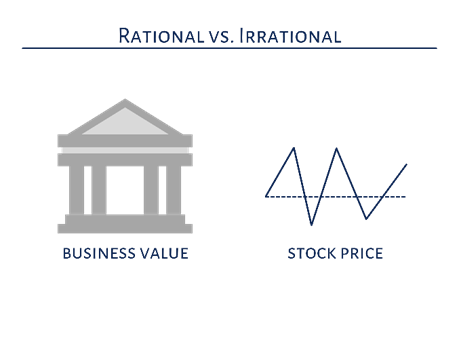
Stock prices have never been a precise indicator of what companies are worth.  They are a very good indicator of what people are willing to pay for their shares at any moment, and right now there seems to be an abundant supply of nervous sellers. There’s little reason to join them if you’re a long-term investor.

Why?  The reasons for bear (down-trending) markets are seldom rational—which, of course, is why bear markets end and stocks return to (and always, in the past, have surpassed) their original highs. 
 
What’s happening right now is not unlike what happens when one of our children is diagnosed with an illness, and the remedy is a daily dose of some awful-tasting medicine.  The illness, in this case, is inflation, which absolutely must be cured if we are to experience a healthy economic life.  Few things are worse than having the money you’ve saved up deteriorate in value at double-digit rates, which is precisely what has been happening this year and will continue to happen if it’s not dealt with.
 
The cure, which any child will tell you is more unpleasant than the illness itself, is the U.S. Federal Reserve raising interest rates, which is one way of reducing the amount of cash sloshing around in the economy.  Rising consumer prices, just like rising stock prices, come about when there is more demand than supply.  Reducing the available cash reduces the number of buyers in relation to sellers (ironically, both in the consumer marketplace and on Wall Street), and eventually slows down the inflation rate to manageable levels. 
 
We can already see how this works in the housing market, where, just a few short months ago, multiple would-be buyers were bidding against each other to pay more than the asking prices.  As mortgage rates have risen, the frenzy has completely dissipated.  The process takes longer in the consumer marketplace at large, but you can bet it’s slowly working behind the scenes.
 
Additional evidence that inflation is cooling can be found in gasoline prices that are solidly below their summer peak levels above $5.00 a gallon, and used car prices, which are normalizing as supplies of new cars on dealer lots are increasing.
 
Doesn’t less spending mean less economic activity?  Doesn’t that lead to a recession?  The answers, of course, are yes and maybe.  But at this point, a recession might not be all that bad for the economy.  Recessions act like a cleansing mechanism, exposing/eliminating waste and inefficiency, ultimately creating a healthier economy when we come out the other end.
 
It’s impossible to know exactly which direction stock prices will go next since stock prices are inherently irrational in the short term. They may rise from here, or go down from here. We know the media’s position will always be one of doom and gloom. Tune them out.
 
I wish I could say that the volatility is over and that we’ve reached bottom.  It’s possible, but it’s more likely that we’ll thrash around the current levels for a few more weeks as we approach the most favorable period in the markets, historically between November and April.
 
Meanwhile, market conditions are heavily stretched to the downside, meaning that we could see a robust snap back this coming week to relieve some heavily over-sold market conditions.  Think of this as your opportunity to unload any losing stocks that have come down so much and have little chance of recovering in the next bull market.  If you’re invested too heavily and have been losing sleep over the current market turmoil, take advantage of the rally to lighten up on some stocks/funds (Disclaimer: this is not a recommendation to buy or sell any securities. Please consult with your own financial advisor or talk to us).
 
I can’t rule out that the markets test lower levels in the weeks ahead; in fact, they likely will. But eventually, this bear market shall come to an end and a great buy point will emerge with a new bull (uptrending) market.
 
For our client portfolios, we took additional defensive action this past week and plan more defensive action in the coming week, depending on the weight of evidence presented by any coming bounce in the markets. If you’re managing your own portfolio, consider whether your own invested percentage is consistent with your risk tolerance and adjust it if you think your portfolio risk level is too high.
 
For now we’re taking our medicine, and boy, does it taste awful.  We are also, collectively, suffering an economic illness.  Anybody who has come down with a bug and taken medicine to cure it knows that the former unpleasantness doesn’t last forever, and therefore neither does the latter.

If you would like to review your current investment portfolio or discuss any other financial planning matters, please don’t hesitate to contact us or visit our website at http://www.ydfs.com. We are a fee-only fiduciary financial planning firm that always puts your interests first.  If you are not a client yet, an initial consultation is complimentary and there is never any pressure or hidden sales pitch. We start with a specific assessment of your personal situation. There is no rush and no cookie-cutter approach. Each client is different, and so is your financial plan and investment objectives.

Source: https://www.nytimes.com/2022/05/14/business/inflation-interest-rates.html

What’s going on in the Markets June 20, 2022

With ten days to go in the 2nd calendar quarter and the end of the first half of 2022, we’ve witnessed one of the worst yearly starts in the markets since 1962 with a decline of about 23% in the S&P 500 index. This makes this year the 3rd worst start for the index in market history.  

The good news? Of the fourteen other worst starts to the year since 1931, ten of them went on to turn in positive returns for the rest of the year, although only five of those fourteen years turned things around and closed with positive returns for the entire year.

Mid-term election years (the 2nd year of a president’s term) have historically been lackluster, but that doesn’t entirely explain why this year has been so awful. Of course, the same culprits outlined in my What’s Going on in the Markets May 8, 2022 newsletter are still front and center today: 1. The war in the Ukraine; 2. Rising inflation; 3. Higher interest rates. A resolution in any of these three culprits could send the markets on a big trek higher.

To be fair, the markets were rife with speculation in all manners of stocks, special purpose acquisition companies (SPACs), initial public offerings, crypto-currencies, non-fungible tokens (NFTs) and other insane valuations of art, homes, antiques, etc. Most of this rampant speculation was fueled by the unprecedented fiscal and monetary stimulus unleashed in the markets by the Federal Reserve and Federal Government to combat a potential economic depression caused by COVID-19. As happens most often, a pendulum that swings too far in one direction must swing too far in the other direction to correct the excess. That’s the nature of cycles-both economic and markets.

From the pandemic low in March 2020 to the high in January 2022, the S&P 500 index more than doubled (+108%), so a market that moves that far in less than two years would historically be expected to give back (retrace) some of those gains at some point. To most students of long-term markets, giving back 50% or more of those gains would not be unusual at all before the uptrend might resume. At a closing level of about 3,678 as of last Friday, that would take the S&P 500 index to around 3,500, about 5% lower than Friday’s close. Nothing says it must stop there, but that level historically would be expected to generate at least a decent bounce or short-term rally.

Adding insult to injury, this has also been one of the worst starts in over 40 years in the bond markets. Long adding ballast to portfolios and a relative haven from the stock market storms, bonds on average are down over 12% year-to-date, with long term treasuries down over 24%. Even 1–3 year treasury bills are down about 3.7%, making even the safest and shortest of duration government bonds not immune from the carnage. Of course, when bond prices decline, their yields increase, so they become more attractive for new investments.

The perfect storm of a bond and stock market decline means that there have been few places to hide, other than energy and commodity stocks. Of course, energy and commodity stock outperformance mean higher prices for goods, which is at the heart of the inflation problem we now have.

Inflation Marches Higher

When so much stimulus enters the economy and markets in a short time, inflation inevitably rears its ugly head. Think of fiscal and monetary stimulus as money printing, and you can quickly understand how adding so many dollars to the money supply would tend to de-value those dollars. Indeed, when the inflation numbers were released for April and May (8.6% and 8.4% consumer price index respectively), they were higher than expected.  Relief in the supply chain logjam was not enough to offset the increased cost of labor, energy, and commodities (mostly raw materials and foodstuff).

Obviously, inflation at this level cannot be sustained longer term and needs to be tamed before it crashes the economy as consumers begin having trouble affording necessities, let alone discretionary purchases. It’s one of the two mandates of the Federal Reserve (The Fed): to reel in inflation using the tools at their disposal to prevent an economic crash.

Interest Rate Hikes

The dual mandates of The Fed are to:

1. Maintain price stability (by keeping inflation to 2% or less) and,

2. Ensure maximum employment.

With unemployment at historic lows, maintaining price stability is currently job #1 for The Fed.

When the pandemic hit, you may recall that The Fed immediately reduced short-term interest rates from 2.25% to 0% to counter the expected economic contraction effects of the COVID-19 pandemic. They also launched one of the biggest asset purchase plans (bond buying) in history as an emergency measure to ensure enough liquidity in the financial system to keep the economy and commerce from seizing up. The Fed kept these asset purchases up through March of this year (far longer than necessary in my opinion), thereby flooding the markets with stimulus.

Beginning in April, The Fed raised short term interest rates by 0.25% for the first time and announced that the bonds bought over the past several years would be sold off over time. Of course, if injecting the markets with all that stimulus and maintaining low interest rates props the markets up, withdrawing that liquidity and raising interest rates should have the exact opposite effect–and of course it has.

The Fed followed up with a 0.5% and 0.75% short term interest rate hike in May and June respectively, bringing the short-term rate to around 1.5%. During the June meeting, The Fed telegraphed that a further 0.5% or 0.75% interest rate hike could be forthcoming in July (and future months) if inflation doesn’t ease in the coming month. Of course, with inflation running over 8%, The Fed, with short term interest rates around 1.5%, is still woefully behind the curve. Many pundits and critics want them to move much faster to tame inflation.

Low interest rates (near 0% for over two years) represent “cheap money” to individuals and companies, encouraging investment, spending, borrowing, and of course speculation. All of that tends to make for an overheated economy, pushing prices higher. Raising interest rates tends to curb the demand for capital and overall spending, thereby reducing pressure on the supply of goods and services, and in turn, reducing pressure on prices. But by doing so, The Fed risks pushing the economy into a recession.

Recession or Soft Landing

The Fed has acknowledged that lifting interest rates may curb consumer and corporate demand enough to push the economy into a recession. Fact is, it’s possible that we’re already in a recession but don’t know it yet.

The textbook definition of a recession is at least “two consecutive calendar quarters of negative gross domestic product or GDP.” For the first quarter of 2022, the economy did register a negative GDP of 1.3%, and the second quarter could potentially register a similar small negative GDP. As of Friday June 16, the Atlanta Federal Reserve lowered GDP estimates for the 2nd quarter to about 0%, which means that it could easily turn negative by the end of the quarter, putting us into a an official recession.

Regardless of how the 2nd quarter plays out, textbook recession or not, I would expect that any recession would be another mild or short one (like the short-lived COVID recession of 2020) as we try and squeeze out much of the excesses brought on by the post-COVID over-stimulus. While you’re likely to be bombarded (and scared witless) by the news media about how the economy has officially fallen into a recession, it remains to be seen how long and how bad it might get. With housing and employment still strong, and corporate earnings holding steady, (albeit weakening somewhat with everything else), the recession should prove to be mild or moderate in my opinion.

What To Do Now

The market is currently in what I would characterize as “no-man’s land”. That’s to say that it’s too late to sell and yet probably too early to buy. As mentioned above, we have the potential to visit the 50% retracement level of S&P 500 at 3,500, 5% lower from here. But the selling was so intense last week, that could be considered somewhat exhaustive, or capitulatory as some refer to it in the business. While bad things tend to get worse in the markets before they get better, the proverbial rubber band to the downside is firmly stretched, meaning that a strong snapback rally could start as early as tomorrow, if not later this week or next.

In a mid-term election year, we tend to see a summer rally from late June into mid-July, with weakness or sideways movement persisting throughout the August-October period. But post-election, a year-end relief rally into the spring tends to be strong. So unfortunately, any relief rally in June/July may prove fleeting, with much better probabilities for a long-term rally coming in the 4th quarter. Of course, this is all crystal ball prognostication, relying on history to project future returns. This should not be relied on to make investment/portfolio decisions.

So, what about nibbling at stocks and stock funds (and even bonds) with the market down so much? While dollar cost averaging over time has a successful track record, the key is your own personal discipline to continue investing at regular intervals and knowing that it may take months or years to become profitable on new buys, especially if this market doesn’t find a bottom until late this year or next.

Those who bought in mid-2008 thinking that the bottom was in found out that they had to endure another 30% drawdown until the ultimate bottom in March 2009. In the end, this all turned out great for long term holders, albeit with a little pain.

If you are confident that you won’t sell everything if the market continues lower and reach your own capitulation point, there’s nothing wrong with nibbling on names that have come down to attractive levels. Personally, I prefer to see signs of strong demand returning from large institutions, something that is still absent at these levels. The path of least resistance, as of today, is unfortunately lower, but that could easily change in a day or two of strong buying.

For our client portfolios, we came into the 2nd quarter with one of our lowest allocations to stocks and bonds in years. We continue to be hedged with cash, stock options and bear market funds, and we continue to harvest profits and raise cash. If we see further weakness and no return of demand from institutions, we will further increase our hedges and continue to sell underperforming positions into any rallies that “peter out” in short order.

If you find yourself stuck in positions that no longer meet your initial criteria for buying them in the first place, consider using upcoming rallies to sell them (even at a loss) and upgrade your portfolio with better performing companies at the right time. Instead of big bites, take little nibbles, and keep in mind that bear market rallies are very good at sucking in investors and convincing them that the selloff is over, only to roll over and make lower lows. This is not a recommendation to buy or sell any security.

No one knows how deep the market will pull back. Have we seen the lows, or do we have some ways to go? I personally think we may have seen the worst of it, but that’s just a gut feeling. That doesn’t mean that I believe that the sell-off is over. Similarly, we have no idea if the next rally will mark the bottom of this pullback or just be another “suckers’ rally”.

In the end, these somewhat painful periods always end, paving the way for a new long-term uptrend (a.k.a., a bull market). As I always echo, investing in the stock market is great for long term returns, as long as you don’t get scared out of it at the wrong time. After all, enduring volatility is the price we pay for outsized long-term returns. Be patient and stay small with buys to keep your risk in line with your own tolerance.

If you would like to review your current investment portfolio or discuss any other financial planning matters, please don’t hesitate to contact us or visit our website at http://www.ydfs.com. We are a fee-only fiduciary financial planning firm that always puts your interests first.  If you are not a client yet, an initial consultation is complimentary and there is never any pressure or hidden sales pitch. We start with a specific assessment of your personal situation. There is no rush and no cookie-cutter approach. Each client is different, and so is your financial plan and investment objectives.
What’s Going on in the Markets May 8, 2022

It was another down week in the stock markets, which, under the surface, was worse than the Dow Jones Industrial Average and S&P 500 indexes being down only about 0.25% might have suggested. Volatility continues to rule the markets daily as investors and traders try to discount the effects of inflation, interest rate hikes, a raging war, and the possibility of a recession in the coming months.

Speaking of interest rate hikes, the Federal Reserve (The Fed) met last week and raised short-term interest rates by 0.5% (bringing them to 0.75%-1.00%). The Fed signaled that more 0.5% interest hikes were likely coming and also mentioned that single day 0.75% hikes were not being considered. Although the markets breathed a sigh of relief on Wednesday and rallied about 3% from the day’s lows, that rally was short-lived as the markets gave it all back and more on Thursday and Friday.

As of Friday’s close, the S&P 500 index is down about 13.5%, while the harder-hit tech-heavy NASDAQ is down about 22.3% year-to-date. Those figures, however, don’t reflect the level of carnage under the surface, where some growth stocks are down as much as 80% from their prior peaks. Strength in the markets is found in energy stocks (where oil prices continue to float above $100 a barrel) and defensive stocks (consumer staples, some healthcare, and utilities).

Even bonds, long known to provide ballast to stocks, are down about 11% year-to-date and have not held up their end of the bargain. Bonds are having one of their worst starts to the year since the 1970s. Even if you’re hiding out in 1–3 year short-term treasury bonds, you’re still down about 3.1% since the beginning of the year. The typical 60/40 (stock/bond) portfolio has provided no shelter from the recent market storm.

When you see both stocks and bonds down in tandem, the usual culprit is an inflationary environment. Last month’s government report on inflation, the Consumer Price Index (CPI), showed inflation rose 1.2% in March, translating to an annualized rate of 8.5%. This coming Wednesday, we get the read on April inflation, which should see inflation easing from March levels (based on reports of declining used car prices, lower demand for homes, and supply chain improvements).

The Fed has two core mandates as its mission: 1) keep unemployment low and 2) maintain price stability.

At this point, The Fed has no choice but to raise interest rates to try and tame the inflation beast. Unfortunately, raising short-term interest rates has the side effect of slowing economic activity because capital becomes more expensive for both consumers and companies, thereby forcing a slowdown of discretionary purchases and capital improvements (and stock buybacks, which buoy the markets). We are already seeing a slight easing in housing market pressures as 30-year mortgage rates tick above 5%.

Inflation at the current rates is simply not tenable, and therefore The Fed must do what it can to keep the prices of goods and services at prices that consumers can afford.

Further taming of the inflation beast with short-term interest rate hikes can sometimes cause such a slowdown in the economy that we see negative growth in the gross domestic product (GDP), as was reported in the 1st quarter of 2022 when GDP unexpectedly contracted by 0.4% (which is an annualized rate of 1.4%).

As of the end of the 1st quarter, we had only experienced a single 0.25% short-term interest rate hike by The Fed, so that was not the proximate cause of the decline in GDP. More likely, the side effects of the ongoing war in Ukraine, a complete lockdown in parts of China because of COVID resurgence, and inflation worries all weighed on the economy in an otherwise environment of robust consumer demand.

The definition of an economic recession is two consecutive quarters of contracting GDP, so 2nd quarter 2022 GDP is pivotal in determining whether we’re already in an economic recession. Perhaps that’s what has the markets worried.

Also on the economic front, both the Institute for Supply Management’s (ISM) Manufacturing Index and the ISM Services Index remained at high levels last month; however, there is some weakness developing under the surface. The ISM Manufacturing Index has fallen in five of the last six months, while new orders for the services sector fell to a 14-month low. At the same time, prices have remained stubbornly high in both indexes, which raises the possibility of economic stagflation (inflation + slowing economy) in the coming months.

What About Now?

While the markets continue their correction (pullback), we have continued to get more defensive in our client portfolios by selling more (underperforming) positions, adding to our hedges, and tightening up our option selling. Unfortunately, in a rising volatility environment, the fruits of our option selling labor don’t begin to show up in client portfolio results until after the volatility subsides, or those sold options expire. That doesn’t mean we won’t continue to allocate to those strategies to reduce portfolio risk, but in the short term, they may not display the intended positive portfolio effects.

While I don’t have a working crystal ball, I’ve seen little evidence that the volatility is about to subside anytime soon. Though the markets are oversold (stretched to the downside) on a short-term basis, we have not seen any bounces that have lasted longer than a day or two, at least not since late March. We are certainly overdue for a robust bounce that lasts at least a few weeks or months, but I don’t see any evidence to believe that we’re at a durable long-term bottom yet.

Therefore, this back-and-forth choppy action may continue until after the mid-term elections, as is typical for this part of the presidential cycle. We may also need to shake out more weak hands in the short term and get to some level of capitulation or panic in order to get a sustainable rally.

One contrary indicator, investor sentiment about the markets, is at some of the lowest levels–some levels on par with sentiment during the great financial crisis in 2007-2009 and the COVID crisis, hinting that investors are not very exuberant about investing in the markets. Another contrary indicator, mutual fund flows, shows that investors of late are cashing out of stocks in recent weeks, which means at some point, many will be forced to buy back their stocks in the near future.

If you’re not a client of ours, I hope you have taken some action with your portfolio during the prior market rallies, to reduce your overall risk and exposure to the stock market. Whether selling some underperforming positions, buying some bear market funds, or just hedging your portfolio in one way or another, figure out a way to reduce your overall portfolio risk. Don’t wait until the market is down a lot before taking some action. You want to have some cash on hand to pick up some “bargains” once the market resumes its uptrend.

If you have not, or if you still feel overexposed, you should consider doing so during the next market rally to bring your portfolio more in line with your own personal risk tolerance. This is especially true if you find yourself worried about your investments more than usual these days. Remember, no one can control what the market does, but you and only you can control the risk you’re taking and the amount of the loss you wish to sustain. If you’re picking up anything on this downturn, keep it small and expect that you’ll have to wait some time to become profitable on these positions. Disclaimer: None of the foregoing should be construed as investment advice or a recommendation to buy or sell any security. Please consult with your own financial advisor or talk to us if you need help.

In a rising interest rate environment where inflation is not yet under control, and where The Fed is now a net seller of bond assets (instead of a buyer), stocks will have a hard time making it back to old highs, not to mention making new ones. While the 13-year-old bull market may not be finally dead, I don’t see this environment as friendly to investing as it has been in the recent past. Don’t assume that the “beach-ball” market that absorbed all manner of “meme stocks”, special purpose acquisition companies (SPACs), Ponzi stocks, a flood of IPOs, and additional stock offerings is going to come roaring back, because I don’t believe that it will anytime soon. Remember, if your favorite stock is down 50%, you need it to double just to get back to even. I don’t think you can count on that anytime soon either.

There’s a saying in the investing world that most have heard: “Don’t Fight The Fed.” That means when The Fed is accommodative with low-interest rates and is actively providing liquidity to the markets (as they mostly have for the past 13 years), you’re essentially investing with the wind at your back. In that environment, you want to be a net buyer, not a net seller of securities.

If you believe that saying is true during the accommodative periods, then trying to fight the Fed when they are withdrawing liquidity and raising interest rates and insisting that the market should go up in the face of those headwinds would not make much sense during the non-accommodative period we’re experiencing right now.  A time of Fed accommodation will return at some point but be patient and cautious with new investments until then.

If you would like to review your current investment portfolio or discuss any other financial planning matters, please don’t hesitate to contact us or visit our website at http://www.ydfs.com. We are a fee-only fiduciary financial planning firm that always puts your interests first.  If you are not a client yet, an initial consultation is complimentary and there is never any pressure or hidden sales pitch. We start with a specific assessment of your personal situation. There is no rush and no cookie-cutter approach. Each client is different, and so is your financial plan and investment objectives.